Dambulla

A UNESCO World Heritage Site centred around the remarkable Dambulla Cave Temple, where ancient cave shrines shelter magnificent Buddhist paintings and statues, reflecting centuries of spiritual and cultural heritage.

Top Attractions in Dambulla

A curated collection of the most celebrated and visited sights across the destination.

Dambulla Cave Temple

Dambulla Cave Temple

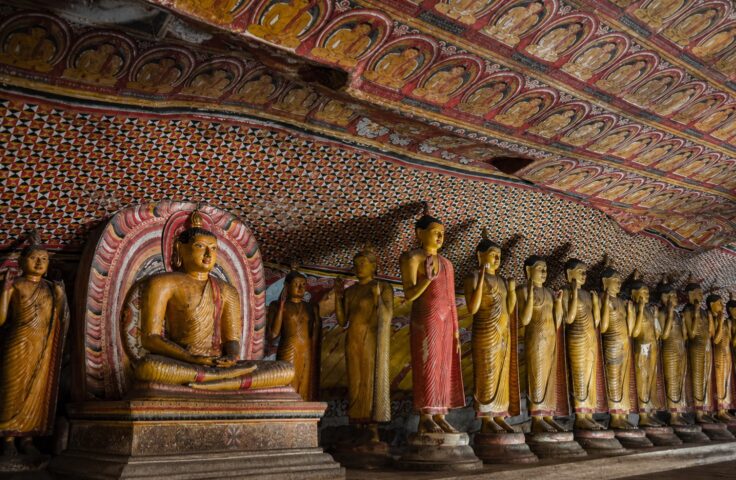
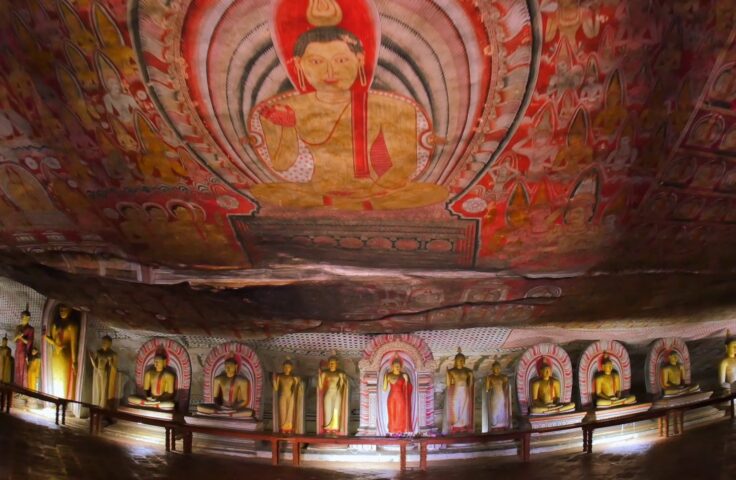
Dambulla Cave Temple is a UNESCO World Heritage Site and the largest and best-preserved cave-temple complex in Sri Lanka. The sacred complex has five cave shrines containing 157 Buddhist statues and magnificent mural paintings covering about 2,100 square metres. The caves have been a place of Buddhist worship and pilgrimage for more than two millennia.
Cave 1 - Devaraja Viharaya (Temple of the Divine King)

Cave 1 - Devaraja Viharaya (Temple of the Divine King)

Dev Raja Vihara, the first cave shrine in the Dambulla Cave Temple complex, is renowned for its 12-metre-long reclining Buddha depicting Parinibbana. At the feet of the statue is a figure traditionally identified as Ananda Thera, though its distinctive hand gestures suggest it may represent the Buddha in a rare posture.

Cave 2 - Maharaja Viharaya (Temple of the Great Kings)

Cave 2 - Maharaja Viharaya (Temple of the Great Kings)

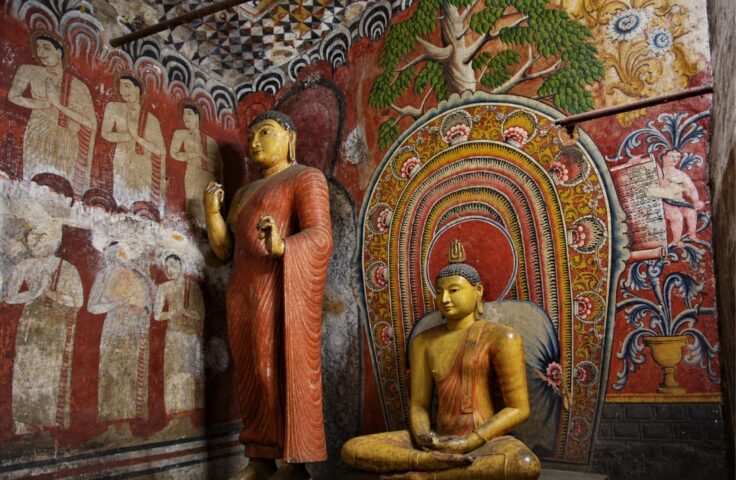
Maharaja Vihara, the largest cave in the Dambulla Cave Temple complex, houses around 60 statues, including a standing Buddha beneath a dragon archway, Bodhisattvas, Hindu deities, and ancient kings. Its richly painted walls and ceiling depict the Buddha’s life, Buddhist history, and significant events from Sri Lanka’s past, reflecting the artistic heritage of the Kandyan period.

Cave 3 - Maha Alut Viharaya (Great New Temple)

Cave 3 - Maha Alut Viharaya (Great New Temple)

Maha Aluth Lena, formerly known as Andiri Ge, was transformed into a shrine by King Kirti Sri Rajasingha (1747–1782). The cave houses 57 Buddha statues, including a magnificent 10-metre-long reclining Buddha and a statue of the king himself. Its richly painted ceiling depicts Buddhas, Bodhisattvas, Arahats, and deities.

Cave 4 - Paspilima Viharaya

Cave 4 - Paspilima Viharaya

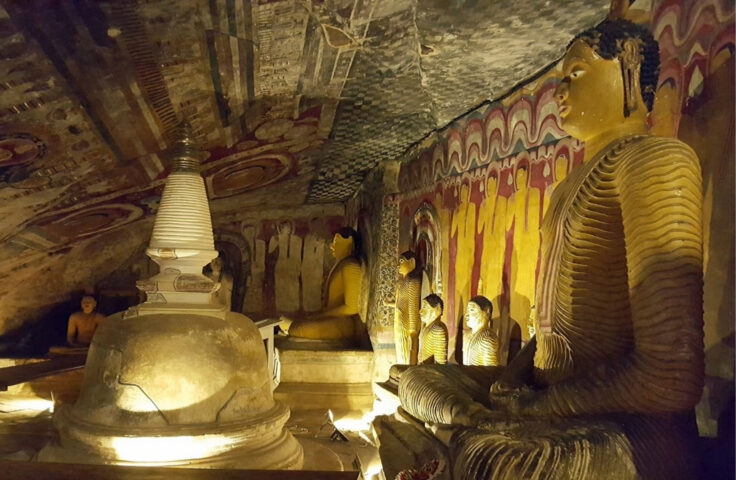
Pas Pilima Vihara is the fourth cave in the Dambulla Cave Temple complex. It houses numerous Buddha statues, mostly seated, with the principal statue positioned beneath a dragon archway. A small stupa in the centre, known as Somawathi Stupa, is traditionally believed to enshrine the jewellery of Queen Somawathi. The cave’s wall paintings depict episodes from the Buddha’s life and figures of Arahats.

Cave 5 - Devana Aluth Viharaya

Cave 5 - Devana Aluth Viharaya

Devana Aluth Viharaya is the fifth and most recently established shrine in the Dambulla Cave Temple complex. It houses eleven Buddha statues, including a reclining Buddha, alongside colourful wall paintings depicting the Buddha, Hindu deities, Arahats, and other figures.

Somawathi Stupa

Somawathi Stupa

Somawathi Stupa is an ancient Buddhist monument near Dambulla Rock. Traditionally believed to have been built by King Valagamba in dedication to his queen, the stupa stands within a four-sided compound. Its terrace combines granite slabs and brick paving, while a sacred stone engraved with the Buddha’s footprint adds to its historical and religious significance.

Golden Temple of Dambulla

Golden Temple of Dambulla

The Golden Temple is the striking Buddhist temple at the foot of the rock leading to the cave complex. It is famous for its large golden Buddha statue and provides the main visual gateway to the Dambulla cave temple. The museum at the base of the complex provides additional information about Buddhist art and the history of the site.

Ibbankatuwa Megalithic Tombs

Ibbankatuwa Megalithic Tombs

Ibbankatuwa Megalithic Tombs are an important prehistoric burial site near Dambulla. The archaeological remains provide valuable evidence of communities that lived in Sri Lanka during the protohistoric period, offering an insight into the island's ancient burial traditions and early settlements.

Popham's Arboretum

Popham's Arboretum

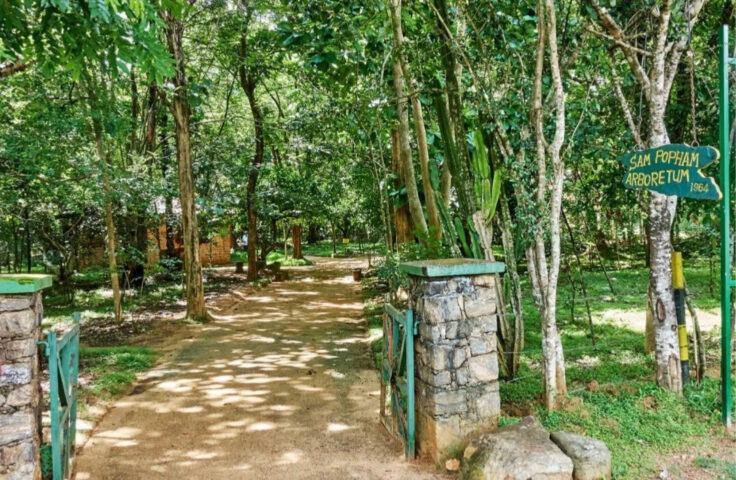
Popham's Arboretum is a peaceful dry-zone forest reserve dedicated to the conservation of Sri Lanka's native trees and wildlife. Visitors can explore its natural surroundings and observe birds, butterflies, plants, and other wildlife.

Rangiri Dambulla International Stadium

Rangiri Dambulla International Stadium

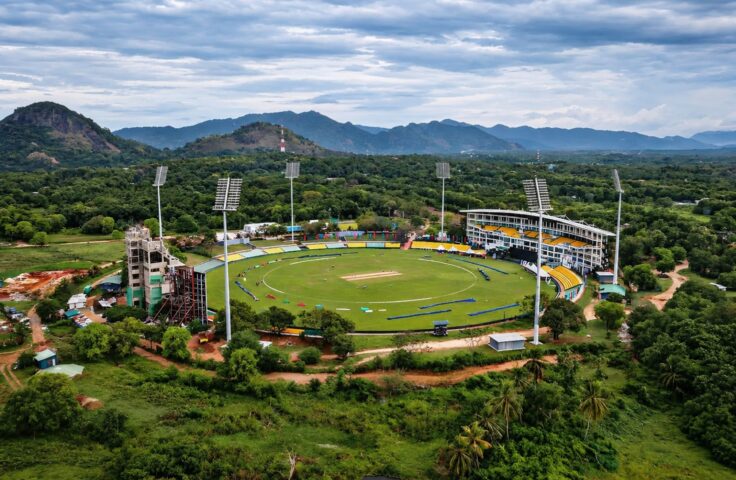
Rangiri Dambulla International Stadium is an important international cricket venue in Sri Lanka. Set against the scenic dry-zone landscape, the stadium has hosted international cricket matches and is a notable landmark for sports enthusiasts.

Kandalama Lake

Kandalama Lake

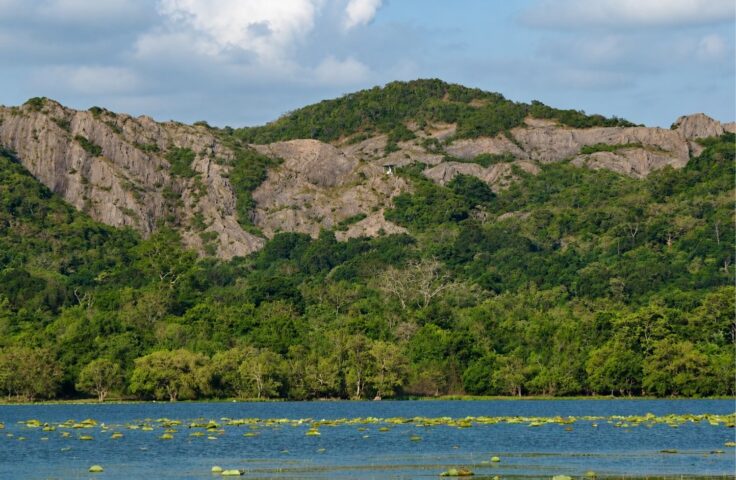
Kandalama Lake is a scenic reservoir surrounded by lush forests and rocky hills near Dambulla. Its tranquil waters and beautiful natural surroundings make it a peaceful spot for enjoying nature, birdwatching and photography.

Hot Air Ballooning

Hot Air Ballooning

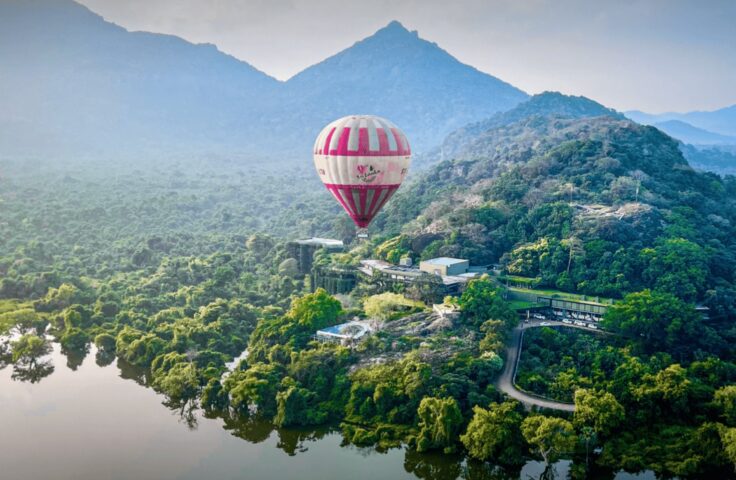
Experience the beauty of Sri Lanka’s Cultural Triangle from above on a hot-air balloon flight. Soar peacefully over the forests, lakes, villages, and ancient landscapes around Dambulla and Sigiriya while enjoying spectacular panoramic views, especially around sunrise. It is a memorable way to experience the region from a completely different perspective.

Jathika Namal Uyana

Jathika Namal Uyana

Approximately 25–30 km from Dambulla

Jathika Namal Uyana is a unique nature and archaeological site renowned for its extensive Na tree (Ironwood) forest and pink quartz mountain range. The area also contains ancient archaeological remains, including statues, stupas, inscriptions, and other ruins. Sri Lanka Tourism describes it as the largest Na forest and pink quartz mountain in Asia.

Aukana Buddha Statue

Aukana Buddha Statue

Approximately 40 km from Dambulla

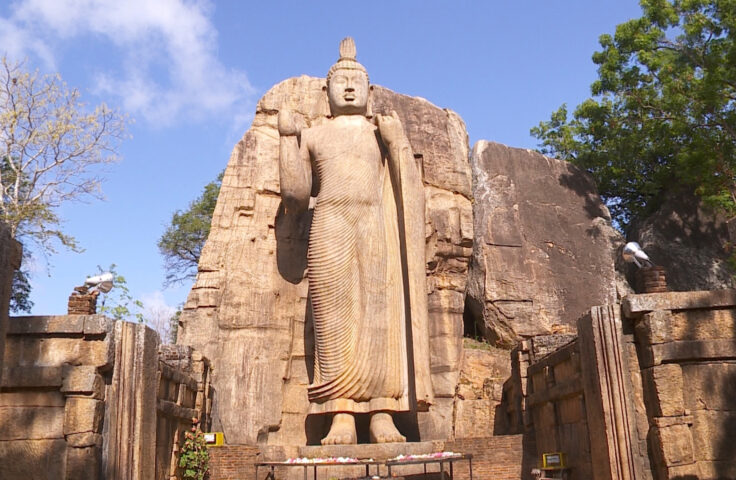
Aukana Buddha Statue is one of Sri Lanka's finest ancient rock-carved Buddha images, standing approximately 11 metres high and carved from a single granite rock. Located near the ancient Kala Wewa reservoir, the statue is an outstanding example of ancient Sri Lankan Buddhist sculpture.

Kala Wewa

Kala Wewa

Approximately 40 km from Dambulla

Kala Wewa is one of Sri Lanka's great ancient reservoirs, traditionally attributed to King Dhatusena in the 5th century CE. The vast reservoir is an impressive example of ancient Sri Lankan irrigation engineering and provides a scenic setting near the historic Aukana Buddha Statue.